One of the most common questions people ask is:
“What age should I start getting Botox?”
The honest answer is simple: there is no perfect age.
A better question is:
“Does my face actually need Botox yet?”
At British Cosmetic Clinic in Bristol, we do not believe Botox should be performed just because someone has reached a certain birthday. We assess the face, muscle movement, line formation, and the patient’s goals before making a recommendation.
Sometimes the answer is yes.
Sometimes the answer is not yet.
And sometimes the answer is no.
Botox Is Not About Age Alone
Some people start noticing expression lines in their mid-20s. Others may not need Botox until their 40s, 50s, 60s, or beyond.
Age matters, but it is not the main factor we consider.
What matters more is:
- Whether lines remain when the face is relaxed
- How strong facial muscle movement is
- Whether lines are becoming etched into the skin
- Whether expression makes you look angry, tired, or older than you feel
- Whether Botox would improve facial harmony naturally
- Whether the request is coming from the right motivation
Movement itself is normal. Even very young faces are expressive.
A Real Case: Daria, Age 26
Daria came to British Cosmetic Clinic at 26.
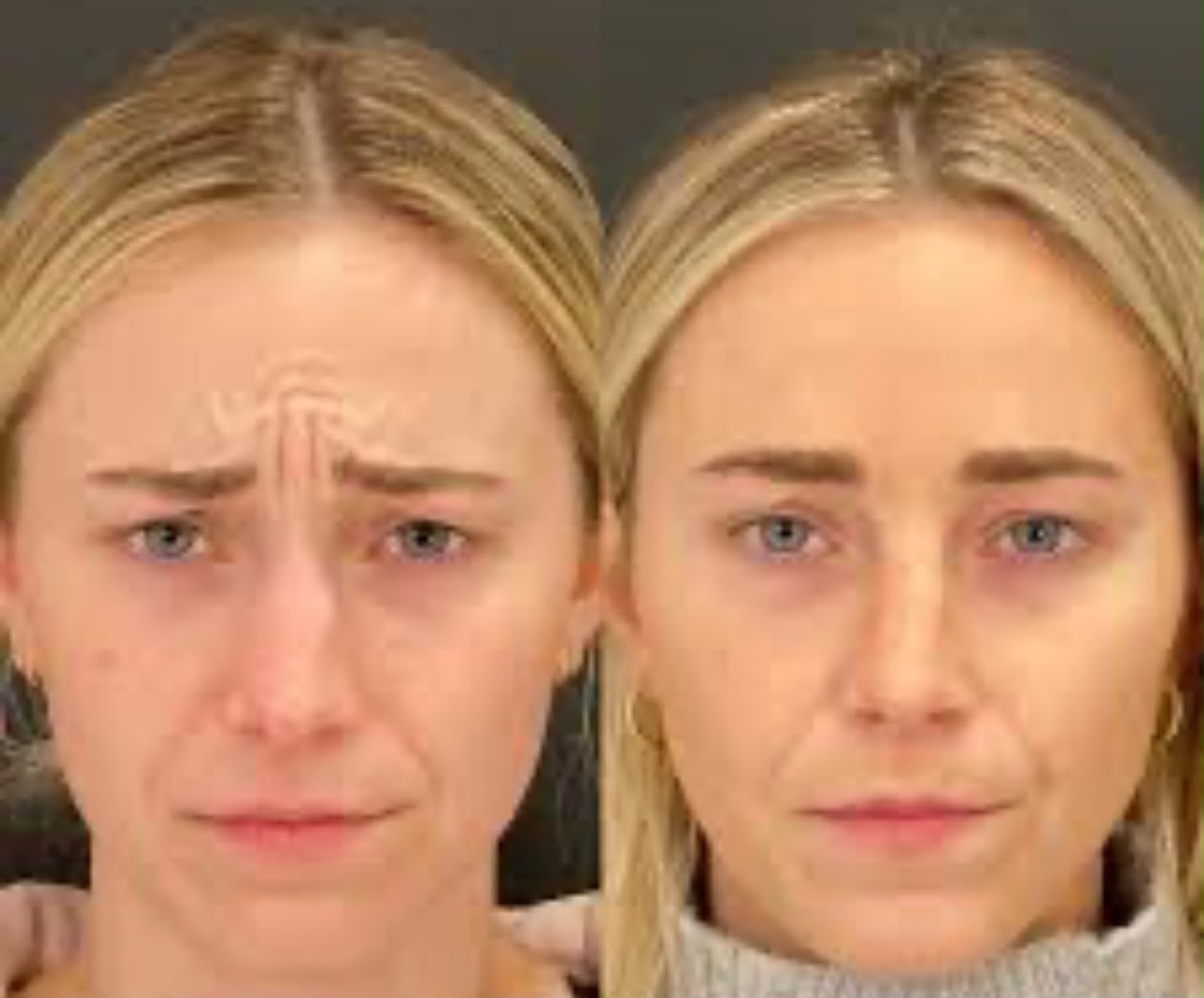
She was a naturally youthful, attractive woman, but had strong frown lines between the eyebrows (the glabella area). These lines made her look more serious or angry than she actually felt.
In her own words, she described having a “resting bitch face”.
She was also starting a new job and worried her expression might affect first impressions. She wanted to look approachable, warm, and confident.
In Daria’s case, Botox was appropriate.
The goal was not to change her face.
It was to soften the frown and align her appearance with her personality.
Two weeks after treatment, the result was exactly what we aim for: softer, fresher, and completely natural.
She also got the job.
Why We Treated Daria But Not Her Younger Sister
Daria’s younger sister, Maria, was 22.
She also asked about Botox, but her lines were minimal and not yet established at rest. In our assessment, she did not need treatment.
It felt more like curiosity and comparison rather than a genuine concern.
That is not a valid reason to have a medical procedure.
So we advised her to wait and reassess in the future if needed.
This is an important part of ethical practice:
Just because someone asks for Botox does not mean they should have it.
What Is the Best Age to Start Botox?
For many people, the late 20s to early 30s is when Botox first becomes worth considering.
At British Cosmetic Clinic, the average age for first-time Botox patients is around 30.
For patients in the 25–30 range, we often use a conservative approach sometimes referred to as “baby Botox”, where the aim is softening movement rather than eliminating it completely.
However, this is always individual.
Some people benefit earlier.
Some much later.
Some not at all.
Should You Get Preventative Botox?
Preventative Botox can be useful in the right circumstances.
If early lines are beginning to appear at rest, small amounts of Botox may help reduce repeated muscle folding over time.
However, preventative Botox should never mean treating young faces unnecessarily.
We are cautious with younger patients because natural youth should be preserved, not altered prematurely.
Preventative treatment should always be subtle, justified, and evidence-based—not trend-driven.
When Are You Too Young for Botox?
Botox is not suitable for cosmetic use under 18.
In practice, we are often more conservative than this.
As a general guideline:
- We are very reluctant to treat under 22
- Most patients are better suited from 25+ unless there is a clear indication
If someone has no meaningful lines and is requesting Botox purely because it is popular online, we will usually advise against it.
That is not refusal. It is protection.
Signs You May Be Ready for Botox
You may be suitable if:
- Frown lines remain visible at rest
- Forehead lines are becoming etched into the skin
- Crow’s feet are developing and bothering you
- You look tired, angry, or stressed when you are not
- Your facial movement is creating persistent lines
- You want subtle refinement, not a frozen result
You may not be ready if:
- Lines only appear during strong expressions
- Skin is smooth when relaxed
- You are very young with no visible concerns
- You are influenced by social media trends
- You expect a complete facial transformation
Can Starting Botox Too Early Make You Look Worse?
Yes, if it is unnecessary or poorly done.
Over-treatment can lead to:
- A frozen appearance
- Heavy or lowered brows
- Uneven expression
- Loss of natural movement
- An unnatural or “done” look
Good Botox preserves identity. It should never erase expression completely.
Can Botox Lift the Eyebrows?
Botox can sometimes create a subtle eyebrow lift when carefully placed.
This may make the eyes look slightly more open and refreshed.
However, Botox is not a surgical brow lift.
It cannot replicate structural change.
It can refine. It cannot dramatically reposition.
Setting realistic expectations is essential before treatment.
What About Older Patients?
It is never “too late” to start Botox.
We regularly treat patients in their 40s, 50s, 60s, and beyond.
Botox at this stage is less about prevention and more about refinement—softening expression, refreshing appearance, and maintaining natural facial character.
The goal is always age-appropriate improvement, not reversal.
Why We Say No So Often
At British Cosmetic Clinic, a significant number of consultations do not lead to treatment.
This is because patients often request a procedure without identifying the underlying concern.
For example:
“I want Botox”
may actually mean
“I want to look less tired.”
A proper consultation focuses on the goal, not just the treatment request.
Sometimes Botox is appropriate.
Sometimes another treatment is better.
Sometimes no treatment is the right answer.
Common Mistakes People Make
The most common issues include:
- Starting Botox too early for the wrong reasons
- Choosing providers based only on price
- Requesting excessive freezing
- Following trends instead of individual assessment
- Expecting Botox to replace other treatments
- Receiving one-size-fits-all treatment plans
Botox should always be tailored to facial anatomy and muscle dynamics.
How Long Does Botox Last?
On average:
- 3–5 months in many women
- 3–4 months in many men
Men often have stronger facial muscles, which can shorten duration slightly.
Longevity depends on metabolism, dose, lifestyle, and treatment area.
Final Thoughts
There is no ideal age to start Botox.
The right time depends entirely on your face, not your birth year.
For some people, Botox is helpful in their mid-20s. For others, it is not needed until much later. And for some, it may never be necessary.
The real question is not:
“What age should I start Botox?”
It is:
“Does my face actually need Botox yet?”
At British Cosmetic Clinic in Bristol, we prioritise natural results, honest advice, and careful assessment. If Botox is right for you, we will explain why. If it is not, we will tell you just as clearly.
If you would like personalised guidance, a consultation will help determine the most appropriate approach for your face and your goals.